Video Content Strategy: How to Get More From One Shoot
When a company invests in professional video production, the conversation usually starts with one deliverable: a brand film, a testimonial, or a recruitment video.
But there’s often an opportunity to create much more.
If you’re already coordinating interviews, booking locations, and bringing in a production crew, it makes sense to consider what additional content could come from that same shoot.
That’s where a thoughtful video content strategy makes a difference. Instead of planning around a single finished video, you can approach production as an opportunity to create multiple marketing assets that support your business long after filming wraps.
Start With a Clear Video Content Strategy
Before developing a shot list or scheduling interviews, start with a simple question: What are we trying to accomplish?
Are you building brand awareness? Launching a new service? Recruiting employees? Helping prospective customers understand what makes your organization different?
The answers should shape your production plan.
For example, a company producing a recruitment video might also benefit from individual employee testimonials, workplace photography, leadership interviews, and short-form videos highlighting its culture.
All of those assets serve the same larger objective, but they give the marketing team different ways to reach prospective candidates.
A strong video marketing strategy connects those individual pieces rather than treating every deliverable as a separate project.
Think Beyond the Main Video
Let’s say your organization is planning a corporate brand film.
You’ve scheduled leadership interviews, arranged access to your facilities, and coordinated a day of filming.
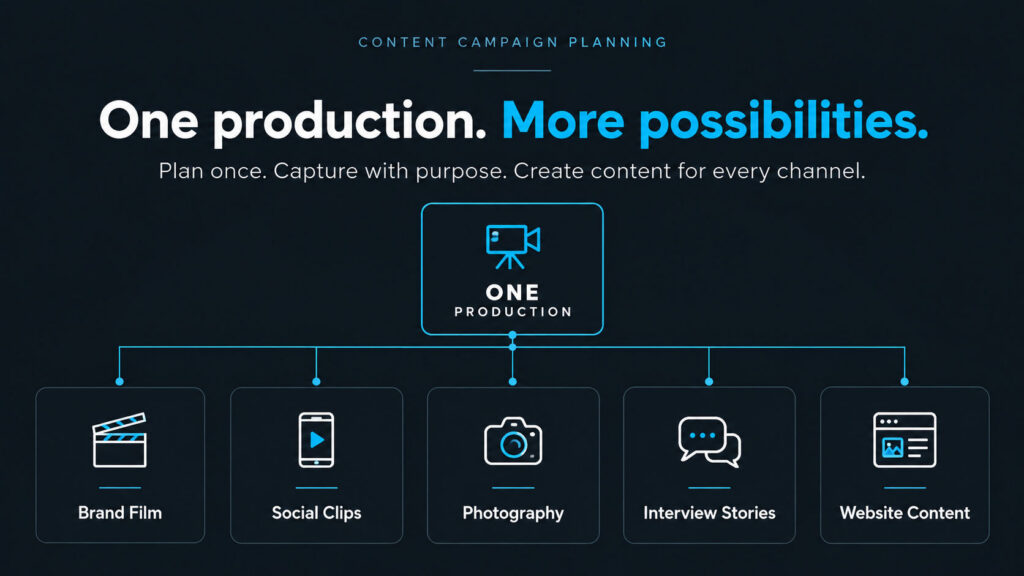
With some additional pre-production planning, you could potentially create:
- Brand Film: A polished video introducing your organization, mission, and value to customers.
- Social Media Videos: Shorter edits featuring specific messages, services, or interview moments.
- Employee or Customer Testimonials: Individual stories that can support recruitment, sales, or brand awareness campaigns.
- Corporate Photography: Executive portraits, workplace imagery, and brand photography for websites and marketing materials.
- Website Content: Supporting video clips, interview excerpts, and visuals for landing pages and digital campaigns.
Of course, not every shoot needs all these deliverables. Additional photography may require a dedicated photographer, and capturing more interviews or footage could mean extending the production schedule.
The point isn’t to squeeze as much content as possible into one day. It’s to identify the opportunities ahead of time and plan accordingly.
When done well, this approach can help make your production investment more useful across multiple marketing initiatives.
Plan Your Video Content Strategy for Multiple Platforms
A video designed for your website isn’t necessarily the ideal format for LinkedIn, Instagram, or YouTube.
Different platforms call for different approaches to length, framing, pacing, and messaging.
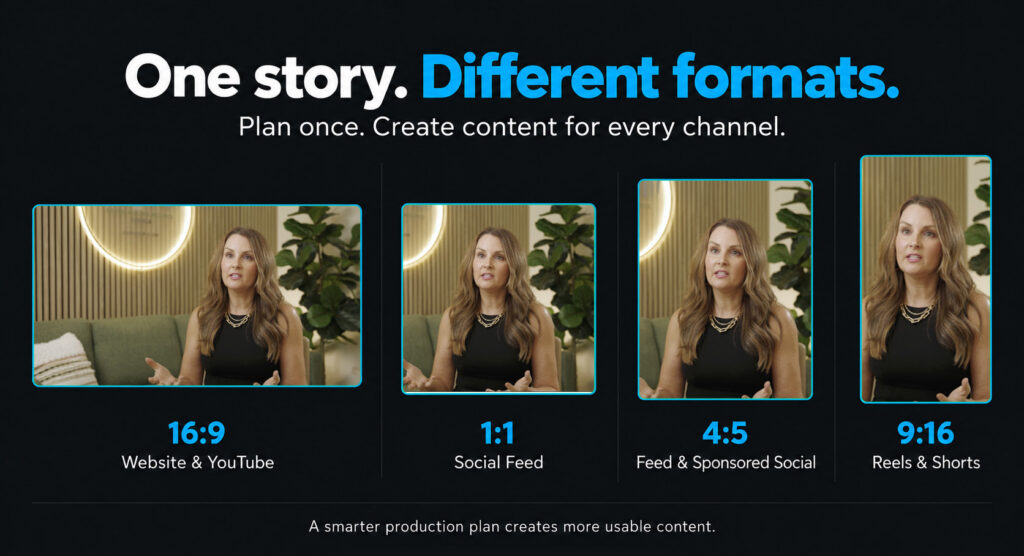
For example, a corporate brand film might be produced in a traditional 16:9 widescreen format, while social media content could require square (1:1), portrait (4:5), or vertical (9:16) versions.
YouTube also categorizes eligible square and vertical videos up to three minutes as Shorts, as outlined in its official YouTube Shorts guidelines.
These are details worth considering before filming begins.
If you’re planning vertical social content, your camera operator may need to frame shots differently, allowing enough room to crop a widescreen image without cutting off important visual elements.
Interviews can also be structured to capture shorter, self-contained answers that make sense outside the longer video.
Planning for multi-platform video content during pre-production gives your editing team more flexibility and creates a better starting point for each deliverable.
Build a Content Library You Can Continue Using
Not everything captured during a production needs to be published immediately.
For organizations with ongoing marketing needs, there’s real value in building a library of professional video and photography assets.
Interview footage, workplace visuals, product demonstrations, and supporting B-roll can all become useful resources for future marketing campaigns.
We’ve seen the importance of this firsthand at Shore Point Productions.
Over four years, we’ve filmed more than 300 physician biography videos for Hackensack Meridian Health. We also produced approximately 70 residency and fellowship program videos within a four-month period.
Projects of this scale require more than good cinematography. They depend on organized production schedules, consistent creative execution, and a reliable approach to managing large volumes of content.
An effective video content strategy should consider not only what you’re creating today, but how that content will be organized, maintained, and used moving forward.
For marketing teams managing multiple departments, services, or ongoing campaigns, that preparation can make a significant difference.
Repurpose Video Content With a Purpose
Content repurposing doesn’t simply mean cutting a long video into a dozen shorter clips.
Each piece should have a reason to exist.
A 30-second employee testimonial might support a recruitment campaign. A short leadership interview could become a LinkedIn post. A compelling brand film excerpt might help introduce a service on your website.
The strongest approach is to identify the audiences, messages, and intended platforms for those assets before editing begins.
This helps your team create content that feels intentional rather than producing variations simply to increase the number of deliverables.
And while having more content can be useful, quality and relevance should always come first.
Five well-planned videos that support clear marketing objectives may provide more value than twenty clips with no defined purpose.
Measure the Success of Your Content Marketing Campaign
Once your content is published, the next step is understanding how it’s performing.
That starts with defining what success looks like for your organization.
If your goal is brand awareness, video reach and audience engagement may be important. If you’re developing a recruitment campaign, applications or visits to your careers page may matter more.
For a campaign designed to generate new business, website inquiries and qualified leads might be your primary indicators.
There isn’t one metric that tells the whole story.
A thoughtful video content strategy considers both the creative deliverables and the business objectives they’re intended to support.
Reviewing those outcomes also helps inform your next production, allowing you to build on what works rather than starting from scratch.
Make Your Next Production Work Harder
The next time you’re planning a professional video shoot, think beyond the immediate deliverable.
Consider where the content will be used, who needs to see it, and what other assets could support your marketing goals.
Bring those ideas into the conversation early. Work with your production team to prioritize the opportunities that make sense for your timeline and budget.
A smarter video content strategy isn’t necessarily about producing more. It’s about creating the right content and making the most of every production.
At Shore Point Productions, we help organizations develop and execute strategic content marketing campaigns through professional video production, commercial photography, and digital content creation.
Whether you’re planning a single brand film or a larger content initiative, we’d love to hear what you’re working on.